







The British Board of Film Classification (BBFC) has published new research into attitudes toward sexual content (including sex references, nudity, and abusive behaviour) and the associated age ratings of anime. Per its press release, its methodology included surveying 2,001 participants from 10 online focus groups aged 16 and over, with respondents including anime fans, non-fans, teenagers, and parents. It adds that it used a mixed methods study, which combines quantitative and qualitative data collection. Information about the respondent groups’ ratios and their representativeness of the population is unclear from the press release.
ALSO READ:
CTW Warned About ‘Offensive’ Depictions of Underage Anime Characters After High School DxD Game Ad Found to Have Violated UK Advertising Rules
The BBFC says that valuable insight was gained by understanding how opinions differ between anime fans and non-fans who are less accustomed to anime’s stylistic and cultural conventions. Some of the report’s insights into attitudes toward sexual content are below:
- 81% agree that sexual scenes in anime are equally impactful as in live-action content, and should be classified similarly.
- 69% say that sexualized nudity should be rated higher than natural nudity.
- This is in line with how the BBFC classifies other content. Nudity was deemed to cross into sexualized territory with “lingering shots, close-ups, or camera angles emphasising characters’ physical attributes add[ing] a sexualised dimension, regardless of the narrative context.” These were among the “most significant aggravating factors in determining higher age ratings for nudity.” (90% of respondents believed this.)
ALSO READ:
Adult Manga Website Nhentai Files Counterclaim Following PCR Distributing Lawsuit
- When an anime sits on the borderline of two age rating categories, the misuse of authority within power-imbalanced situations was the most powerful factor in determining which rating to select (86% of respondents).
- In second place, characters who appear to be children or behave in a childlike way (82%)
- 80% found that fan service pushed anime into higher categories
- 47% found that comedic or fantastical elements can lessen the impact of sexual material in anime.
- Situations where sexualization content was paired with comedy or where problematic content was challenged/condemned mitigated concerns. Tolerance decreased when sexualization featured nudity, explicit sexual activity, or gratuity, “such as through overt ‘fan service.’“
- 40% found that brief and infrequent sexual content may warrant lower classifications.
You can read the full report, which includes other statistics and anecdotes, here. The BBFC reports that parents unfamiliar with anime inherently assume that it’s child-friendly; 88% of respondents agreed that there was a risk to children if it was not age-rated appropriately and consistently.
Ofcom to Extend Regulation of On-Demand Platforms via ‘Video-on-Demand Code’ in the UK, Roping In Previously Excluded Companies Like Netflix
Notably, the report mentions the ongoing work of the UK communications regulator Ofcom in shaping the upcoming Video-on-Demand Code. The Code is expected to be published by September 2026 and enforced starting in Summer 2027. It was deemed necessary following consultations and aims to empower Ofcom to subject content on on-demand services to editorial standards “similar to the ones that protect people from harmful content on broadcast TV. This means we will be handling complaints about content shown on these platforms,” says Ofcom. The Code’s coverage includes problematic content and accessibility requirements like subtitling.
Specifically, Ofcom will have the power to urge “Tier 1” on-demand programme services (the “largest, most TV-like” services) to adhere to the Code through notices, issue financial penalties, and suspend service of the platform if other options fail (Chapter 4 – Enforcement General). The UK Secretary of State will decide the Tier 1 platforms after considering Ofcom’s report (Media Act 2024, 368HB). These will likely include Netflix, Amazon Prime, and Disney+, given prior statements (via Simkins).
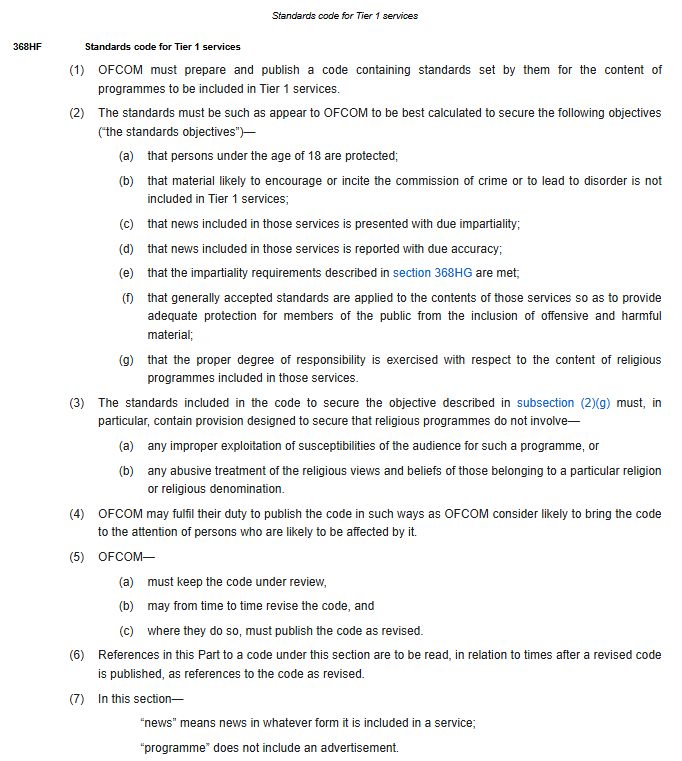
Ahead of the publication of the Code, an outline of standards that Tier 1 platforms will have to adhere to can be seen in part below and at the following link (Standards code for Tier 1 services – Media Act 2024, 368HF). (Also see 368HA to 368HR, and Chapters 3 to 5 more generally.)
The BBFC’s anime sexual content report suggests that there’s broad support for treating standards the same regardless of whether an anime is broadcast on TV or streams on an on-demand platform; 91% of respondents said they believe age ratings for anime should follow consistent standards, wherever the content is accessed.
In 2021, the government of the time said that the Code would respect issues of free speech and proportionality. “[S]maller, lower risk on-demand services in the UK will continue under existing rules, ensuring services that have a smaller audience size and pose lower-risk to viewers, are not unfairly or unnecessarily penalised.” You can read some of the concerns raised by smaller services if exceptions weren’t made here. Currently, Ofcom can’t enforce actions against platforms whose head office and editorial decision-making function aren’t based in the UK (via Ofcom), which is why the Code is being brought in.
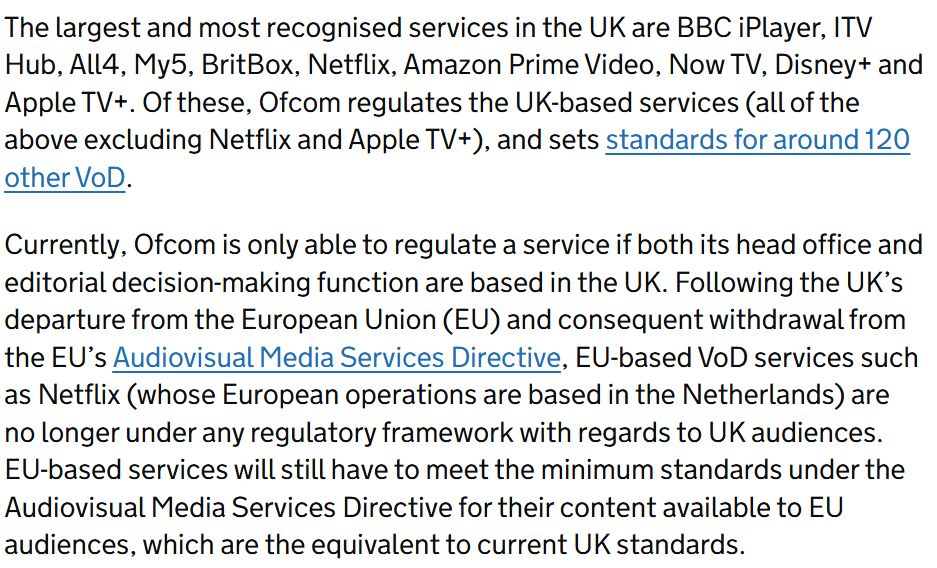
Currently, Ofcom regulates platforms like Amazon Prime Video and Disney+ (but not Netflix or Apple TV+) under On-demand programme services (ODPS) rules.
“Proportionality” is especially notable as anime streaming services Crunchyroll and HIDIVE recently joined the specialty streaming advocacy group Beyond Mainstream to collectively advocate for “fair and proportionate regulations for these specialized platforms.” It’s working to “ensure a more equitable regulatory environment where members have a strong collective voice in global regulatory and policy debates.“
The BBFC’s methodology included surveying 2,001 participants from 10 online focus groups aged 16 and over, with respondents including anime fans, non-fans, teenagers, and parents. It adds that it used a mixed methods study, which combines quantitative and qualitative data collection. Information about the ratios of the respondents’ groups and their representativeness of the population is unclear from the press release.
Source: BBFC, Advanced Television
©Akihiro Ononaka · Takeshobo / Gushing Over Magical Girls Production Committee